Mental Wellness
Regular exercise is not only crucial for physical health but also plays a significant role in maintaining mental wellness. Mental wellness is essential for overall health as it encompasses emotional, psychological, and social well-being. When our mental health is in a good state, we are better equipped to handle stress, make sound decisions, and maintain healthy relationships.
Exercise has been shown to have a positive impact on mental wellness by reducing symptoms of anxiety, depression, and stress. Physical activity releases endorphins, which are known as “feel-good” hormones that can elevate mood and promote a sense of well-being. Engaging in regular exercise can also improve sleep quality, boost self-esteem, and increase cognitive function.
Activities to Complement Exercise Routines
- Yoga and Meditation: Practicing yoga and meditation can help reduce stress levels, improve focus, and enhance mindfulness.
- Outdoor Activities: Spending time in nature, such as hiking or biking, can have a calming effect on the mind and reduce feelings of anxiety.
- Socializing: Engaging in social activities like team sports or group fitness classes can provide a sense of community and support, contributing to mental wellness.
- Creative Outlets: Pursuing creative hobbies like painting, writing, or playing music can serve as a form of self-expression and emotional release.
Physical Fitness: Benefits Of Exercise For Mental Health
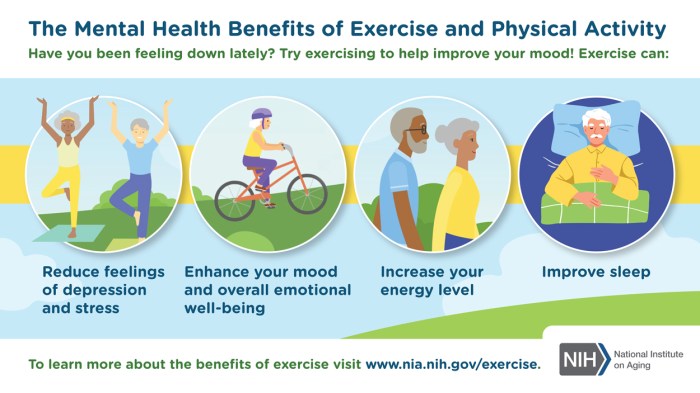
Regular physical activity has a profound impact on mental health, as it helps to reduce symptoms of anxiety and depression, improve mood, and enhance overall well-being. The connection between physical fitness and mental health is well-established, with exercise triggering the release of endorphins, also known as the “feel-good” hormones, which can alleviate stress and boost cognitive function.
Examples of Beneficial Exercises
- Cardiovascular exercises like running, cycling, or swimming not only improve physical fitness but also increase heart rate and release endorphins, promoting mental well-being.
- Strength training exercises such as weightlifting or bodyweight exercises can help build muscle mass, improve bone density, and contribute to a sense of accomplishment and confidence, benefiting mental health.
- Yoga and Pilates focus on mindfulness, breathing techniques, and flexibility, which can reduce stress, calm the mind, and improve mental clarity.
Role of Physical Fitness in Preventing Mental Health Issues
Regular physical activity plays a crucial role in preventing mental health issues by reducing the risk of developing conditions like anxiety and depression. Exercise helps regulate neurotransmitters in the brain, improves sleep quality, and enhances self-esteem and body image, all of which contribute to better mental health outcomes.
Healthy Eating
Benefits of exercise for mental health – Eating a balanced and nutritious diet plays a crucial role in supporting mental well-being. The food we consume directly impacts our brain function and mood, making it essential to focus on healthy eating habits.
Impact of Healthy Eating on Mental Health
Healthy eating provides the necessary nutrients for optimal brain function, which can improve mood, reduce symptoms of anxiety and depression, and enhance overall mental well-being. A diet rich in fruits, vegetables, whole grains, lean proteins, and healthy fats can have a positive impact on mental health.
Tips for Incorporating a Balanced Diet
- Include a variety of fruits and vegetables in your meals to ensure you get essential vitamins and minerals.
- Opt for whole grains such as brown rice, quinoa, and whole wheat bread over refined grains.
- Choose lean proteins like poultry, fish, beans, and nuts to support brain health.
- Incorporate healthy fats from sources like avocado, nuts, seeds, and olive oil for proper brain function.
- Limit processed foods, sugary snacks, and beverages high in added sugars, as they can negatively impact mental health.
Relationship Between Nutrition, Exercise, and Mental Health
Nutrition and exercise are interconnected when it comes to mental health. A balanced diet provides the energy needed for physical activity, while exercise can boost mood and cognitive function. Combining healthy eating habits with regular exercise can lead to improved mental well-being and overall quality of life.
Preventive Care
Regular exercise is not only beneficial for improving mental health but also plays a crucial role in preventive care for various mental health conditions. By incorporating exercise into your routine, you can take proactive measures to safeguard your mental well-being and reduce the risk of developing certain disorders.
Preventive Measures through Exercise
- Regular cardiovascular workouts, such as running or cycling, can help reduce the risk of depression and anxiety by releasing endorphins and improving mood.
- Strength training exercises can enhance self-esteem and body image, contributing to a positive mindset and reducing the likelihood of body dysmorphic disorders.
- Yoga and mindfulness practices not only improve flexibility and strength but also aid in stress management, lowering the chances of chronic stress-related conditions.
Benefits of Preventive Care in Wellness Routine
- Incorporating preventive care measures through exercise promotes overall well-being and resilience against mental health issues.
- By engaging in regular physical activity, individuals can maintain a healthy balance of neurotransmitters in the brain, reducing the risk of mood disorders.
- Preventive care through exercise fosters discipline and consistency in self-care practices, leading to long-term mental wellness and stability.
Balanced Diet
Having a balanced diet is crucial for both mental and physical health. It provides the necessary nutrients to support brain function, regulate mood, and maintain overall well-being.
Importance of a Balanced Diet
A balanced diet not only fuels the body for exercise but also plays a key role in supporting mental health. It ensures that the brain receives essential vitamins, minerals, and antioxidants needed for optimal cognitive function and emotional well-being.
- Aim for a variety of colorful fruits and vegetables to get a range of vitamins and minerals.
- Incorporate lean proteins like chicken, fish, beans, and nuts for muscle repair and brain function.
- Include whole grains such as quinoa, brown rice, and whole wheat bread for sustained energy levels.
- Healthy fats from sources like avocados, olive oil, and nuts can support brain health and mood regulation.
Creating a Balanced Diet Plan
When creating a balanced diet plan to complement an exercise regimen, it’s important to focus on nutrient-dense foods that provide sustained energy and support recovery.
- Plan meals that include a balance of carbohydrates, proteins, and fats to fuel workouts and aid in muscle repair.
- Stay hydrated by drinking plenty of water throughout the day to support digestion, nutrient absorption, and overall well-being.
- Avoid processed foods high in sugar, salt, and unhealthy fats, as they can negatively impact mood and cognitive function.
Impact of Nutrition on Mood and Cognitive Function
Nutrition has a direct impact on mood and cognitive function. A diet rich in nutrients like omega-3 fatty acids, antioxidants, and vitamins B and D can help improve mood, reduce inflammation, and support brain health.
Remember, what you eat not only influences your physical health but also your mental well-being.
Regular Exercise
Regular exercise plays a crucial role in improving mental health by reducing symptoms of anxiety, depression, and stress. It helps in releasing endorphins, which are chemicals in the brain that act as natural painkillers and improve mood.
Benefits of Regular Exercise for Mental Health, Benefits of exercise for mental health
- Enhances mood and reduces symptoms of anxiety and depression.
- Improves concentration and cognitive function.
- Boosts self-esteem and body image.
Types of Exercises for Mental Well-being
- Aerobic Exercises: Such as running, swimming, or cycling, help in releasing endorphins and improving overall mood.
- Yoga: Combining physical postures, breathing techniques, and meditation, yoga helps in reducing stress and promoting relaxation.
- Strength Training: Weightlifting or resistance training can boost self-esteem and improve body image.
Consistency in Exercise Routines
Regular and consistent exercise routines are essential for long-term mental health benefits. Consistency helps in maintaining a positive outlook, reducing symptoms of anxiety and depression, and improving overall well-being. It is important to find exercises that you enjoy and can easily incorporate into your daily routine to ensure long-term success in improving mental health.
Mental Health
Regular exercise has been shown to have a profound impact on mental health, affecting conditions such as anxiety and depression. The relationship between exercise and mental well-being is complex but well-documented.
Anxiety and Depression
- Exercise has been found to reduce symptoms of anxiety and depression by releasing endorphins, which are known as “feel-good” hormones that can elevate mood.
- Physical activity can also serve as a distraction, helping individuals break the cycle of negative thoughts and rumination that often accompany these mental health conditions.
- Engaging in exercise can improve self-esteem and confidence, providing a sense of accomplishment and control over one’s body and mind.
Stress Reduction and Mood Improvement
- Exercise is a powerful stress reliever, as it helps to lower cortisol levels, the hormone responsible for stress, and promotes relaxation.
- Regular physical activity can enhance cognitive function, boost memory, and improve overall cognitive performance, contributing to better mood regulation.
- Individuals who exercise regularly often report feeling more energized, positive, and optimistic about life, indicating a significant improvement in their overall well-being.
Success Stories and Testimonials
After incorporating daily walks into my routine, I noticed a significant decrease in my anxiety levels and a more positive outlook on life. Exercise truly transformed my mental health for the better.
Weightlifting has been my saving grace in managing my depression. The sense of accomplishment I feel after each workout is unparalleled, and I can feel my mood lift with each session.
Yoga has not only improved my flexibility and strength but has also helped me find inner peace and calm in the midst of life’s chaos. It’s like therapy for both my body and mind.
Holistic Wellness
Regular exercise plays a crucial role in achieving holistic wellness, which encompasses the overall well-being of an individual across mental, physical, and emotional aspects. When exercise is incorporated into a holistic wellness routine, it contributes to a balanced and healthier lifestyle that promotes optimal health benefits.
Interconnectedness of Mental, Physical, and Emotional Well-being
- Physical Exercise: Engaging in regular physical activity not only improves physical health but also has a direct impact on mental well-being. Exercise releases endorphins, which are known as “feel-good” hormones that can help reduce feelings of stress, anxiety, and depression.
- Mental Health Benefits: Exercise has been linked to improved cognitive function, better memory retention, and enhanced focus. These mental health benefits can positively impact emotional well-being and overall quality of life.
- Emotional Well-being: By reducing levels of cortisol, the stress hormone, exercise can help regulate mood and promote emotional stability. Physical activity provides a healthy outlet for managing emotions and reducing symptoms of mood disorders.
Strategies for Incorporating Exercise into a Holistic Wellness Routine
Consistency is key when integrating exercise into a holistic wellness routine. Start by setting realistic goals and gradually increasing the intensity and duration of your workouts. Find activities you enjoy to make exercise a sustainable part of your lifestyle.
- Combine Cardio and Strength Training: A well-rounded exercise routine should include both cardiovascular exercises, like running or cycling, and strength training exercises, such as weightlifting or bodyweight workouts.
- Practice Mindful Movement: Incorporate mindful exercises like yoga or Pilates to improve flexibility, balance, and mindfulness. These practices can enhance the mind-body connection and promote overall well-being.
- Stay Active Throughout the Day: Take short breaks to stretch or walk, use stairs instead of elevators, and engage in active hobbies to increase overall daily movement. Small lifestyle changes can have a significant impact on your holistic wellness.
Chronic Diseases
Regular exercise plays a crucial role in managing chronic diseases that impact mental health. Exercise has been shown to have numerous benefits in improving the overall quality of life for individuals dealing with chronic conditions.
Benefits of Exercise for Chronic Diseases
- Exercise helps in reducing symptoms of depression and anxiety in individuals with chronic conditions such as diabetes, cardiovascular diseases, and arthritis.
- Physical activity can improve cognitive function and reduce the risk of cognitive decline in individuals with conditions like Alzheimer’s disease and dementia.
- Regular exercise can help in managing chronic pain conditions like fibromyalgia and lower back pain by releasing endorphins, which act as natural painkillers.
- Engaging in physical activity can also improve sleep patterns and overall mood in individuals with chronic diseases, leading to enhanced mental well-being.
Immunity Boosters
Regular exercise plays a vital role in boosting immunity and overall health. By engaging in physical activity, you can strengthen your immune system and reduce the risk of falling ill. Additionally, a strong immune system is closely linked to mental well-being, as it can help reduce stress and anxiety levels.
Combining Exercise with Immunity-Boosting Practices
- Include a variety of exercises in your routine, such as cardio, strength training, and flexibility exercises, to enhance overall immunity.
- Stay hydrated before, during, and after workouts to support your immune system.
- Get an adequate amount of sleep, as rest is crucial for a healthy immune response.
- Follow a balanced diet rich in fruits, vegetables, whole grains, and lean proteins to provide essential nutrients for immune function.
- Avoid smoking and limit alcohol consumption, as these habits can weaken the immune system.
FAQ Resource
How often should I exercise for mental health benefits?
It is recommended to engage in at least 150 minutes of moderate-intensity exercise per week to experience positive effects on mental health.
Can any type of exercise improve mental well-being?
While various forms of exercise offer benefits, aerobic exercises like running, cycling, or swimming are particularly effective in enhancing mental health.
Is there a connection between nutrition and mental health?
Yes, maintaining a balanced diet rich in nutrients can significantly impact mental well-being by providing essential nourishment for cognitive function and mood regulation.


More Stories
How to detox your body for a stronger immune system
Benefits of probiotics for immune health: Enhancing Your Bodys Defense System
Benefits of elderberry syrup for immunity: Boosting Your Health Naturally